
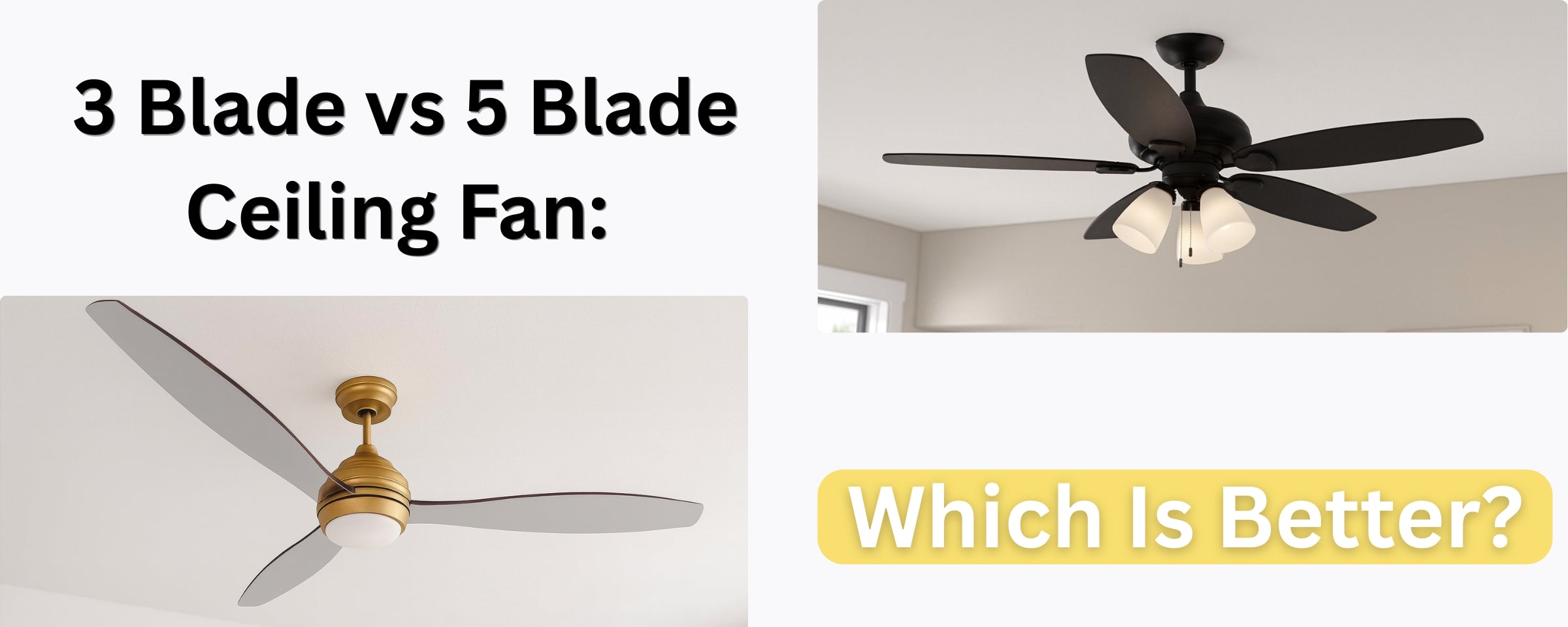
 A ceiling fan can look nearly identical on the showroom floor and still perform very differently once it’s installed. The difference often comes down to the number of blades, but that’s only part of the story. In a 3 blade vs 5 blade ceiling fans comparison, airflow, noise, efficiency, appearance, and overall comfort all play a role. The right choice depends on the room, the motor, and the blade design—not just the blade count. Here’s how to decide which option fits your space best.
The better fan depends on what matters most: stronger air movement, quieter operation, visual style, or steady everyday comfort. A 3 blade fan is often chosen for a modern look and a more aggressive feel, while a 5 blade ceiling fan usually appeals to buyers who want smoother circulation and a softer breeze. Blade count matters, but motor power, blade pitch, and blade shape often matter more. That’s why one fan can outperform another even with the same number of blades.
Quick Answer: Which Fan Moves More Air?
A 3 blade fan often moves air in a more direct, forceful way because it can spin faster with less drag. A 5 blade ceiling fan usually delivers a smoother, more evenly distributed breeze that feels calmer in the room. Real-world performance still depends on room size, fan size, and build quality. A well-made 5-blade ceiling fan can outperform a poorly designed 3-blade model, so the number of blades should never be the only buying factor.

How Blade Count Changes Fan Performance
The number of blades changes how much resistance the motor has to overcome, which affects speed, air circulation, and the way the breeze feels. Fewer blades usually mean less drag, so the fan can spin faster and create stronger bursts of air. More blades spread that air across a wider area, which often feels gentler. That difference is less about raw power and more about comfort. A fan with more blades can feel smoother, while fewer blades can feel sharper and more immediate.
Fewer Blades and Faster Spin
With fewer blades, there is less surface area of the blade creating drag, so the motor may spin faster. That faster rotation can help a 3 blade ceiling fan feel more powerful, especially in larger rooms where direct air movement is useful. Still, faster spin alone does not guarantee better cooling. If the blade pitch is weak or the motor is underpowered, the fan may still move less air than expected.
More Blades and Smoother Airflow
Extra blades tend to soften the airflow and distribute it more evenly across the space. Instead of a strong burst, the room gets a calmer, more continuous breeze. That can be a big advantage in bedrooms, reading areas, or spaces where quieter comfort matters more than punchy air movement. The result is practical: less harshness, less flicker in perceived airflow, and a more relaxed feel under the fan.
3 Blade Ceiling Fan: Pros and Cons
A 3 blade ceiling fan is usually the choice for buyers who care most about air movement and a cleaner, more modern ceiling fan design. It often feels lighter visually and can be a strong fit for contemporary spaces. The tradeoff is that the airflow may feel less diffused, and some models can be less subdued at higher speeds. As with any ceiling fan, a good motor is the difference between a strong performer and a disappointing one.

Benefits of a 3 Blade Fan
The biggest advantage is stronger airflow potential. A 3 blade fan can often spin faster and move more air with a sharper, more noticeable breeze. Many people also like the sleek, minimalist look, especially in modern interiors or rooms where the fan should blend into the architecture. It can be a smart choice for spaces that need direct cooling rather than a soft background breeze.
Limitations to Consider
The airflow may feel less soft or less evenly spread than with a 5 blade ceiling fan. That can be fine in a living room, but it may feel too direct in a quiet bedroom. Some 3-blade models also create a more noticeable sound at higher speeds, especially if installation is off or the blades are not balanced well. A weak motor can erase any advantage, no matter how good the blade design looks on paper.
5 Blade Ceiling Fan: Pros and Cons
Many buyers choose a 5 blade ceiling fan for comfort, quieter operation, and a fuller visual look. The extra blades can make the breeze feel more balanced and less harsh, which is appealing in daily-use rooms. On the design side, the fuller profile often works well in traditional, transitional, and family-friendly interiors. The possible downside is added drag, which can make the fan feel less forceful than a 3 blade fan of similar quality.

Benefits of a 5 Blade Ceiling Fan
A 5 blade ceiling fan usually creates a smoother, more even breeze that feels comfortable over long periods. That quieter, gentler feel is one reason it’s popular in bedrooms and shared living areas. The design also tends to look complete and polished, especially when the blades match the room’s trim, furniture, or lighting. For many homes, that balance of comfort and appearance is the main reason to choose it.
Possible Downsides
More blades can create more resistance, so the motor may not spin as freely. In practice, that can mean the fan does not feel as forceful as a 3 blade fan. The difference is not always dramatic, but it matters if maximum air circulation is the goal. A 5-blade ceiling fan is often better at calm comfort than at pushing strong breezes across a large space.
Airflow, Noise, and Efficiency Compared
The biggest decision factors usually come down to airflow, noise, and energy saving. A 3 blade ceiling fan may feel more powerful because it can spin faster, while a 5 blade ceiling fan often feels smoother and quieter. Efficiency depends on the whole system: motor quality, fan size, blade pitch, and balance all affect how much power it takes to move air. Blade count helps shape the experience, but it does not decide the outcome by itself.
| Factor | 3 Blade Fan | 5 Blade Ceiling Fan |
|---|---|---|
| Airflow feel | Direct, stronger bursts | Smoother, broader breeze |
| Noise | Can be more noticeable | Often quieter |
| Efficiency | Can benefit from lower drag | Depends more on motor and design |
| Best use | Airflow-first spaces | Comfort-first rooms |
Airflow Differences
Airflow is the most important performance measure for many buyers. A 3 blade fan can feel more direct and forceful because fewer blades reduce resistance and may allow a faster spin. A 5 blade ceiling fan usually spreads that air more broadly, which can feel softer under a couch, bed, or dining table. Neither is automatically better; the better airflow is the one that matches the room and the way it’s used.
Noise and Comfort
In quiet bedrooms, a smoother fan often feels less intrusive than a sharper-moving one. That is why a 5 blade ceiling fan is often preferred when comfort is the priority. In open living areas, a bit of sound may not matter as much if the fan is creating strong air movement. Installation quality matters here too; an unbalanced fan or loose mount can make any model sound worse than it should.
Energy Saving and Efficiency
Lower drag can help a motor work less hard, which is why some people assume fewer blades always mean better efficiency. The reality is more nuanced. Fan size, motor quality, and blade pitch influence energy use just as much, and sometimes more. A well-designed 5-blade ceiling fan can be efficient, while a poorly built 3-blade fan may waste power. Blade count is only one piece of the efficiency puzzle.
What Really Matters More Than Number of Blades
If the goal is better performance, the engineering details deserve more attention than the blade count alone. Blade pitch, blade shape, material, and motor strength all change how much air the fan moves and how it feels doing it. That’s why two fans with the same number of blades can perform very differently. The real question is not just how many blades are on the fan, but how the whole system is built.

Blade Pitch and Shape
Blade pitch controls how aggressively the fan pushes air. A steeper pitch can move more air, but it can also add noise or stress depending on the motor. The angle of the blade affects both circulation and comfort, which is why blade pitch and shape should be read as a pair. A fan designed well can create better airflow without sounding harsh or overworked.
Blade Material and Motor Power
Blade material can influence durability, weight, and stability. Lighter materials may help a fan spin faster, while sturdier materials can improve long-term performance if the motor supports them. A stronger motor is often the bigger advantage, because it can move more air regardless of blade count. Poor balancing, on the other hand, can hurt performance on any model, whether it has three blades or five.
Best Fan Choice by Room and Use Case
The right ceiling fan often depends on how the room is used. Large rooms and open layouts usually benefit from stronger air movement, while bedrooms and quiet family spaces often feel better with gentler circulation. Style also matters. Some interiors look best with a minimal, performance-first fan, while others need a fuller design that feels more traditional. Matching the fan to the room usually delivers better satisfaction than chasing blade count alone.
When a 3 Blade Fan Makes Sense
A 3 blade fan makes sense in larger rooms, open layouts, and spaces where stronger cooling is the goal. It can also fit homes that lean modern or minimalist, where a cleaner ceiling profile matters. If the room needs direct airflow and the fan is expected to do more heavy lifting, a 3 blade ceiling fan is often the better fit. It is a practical choice when air circulation matters more than a soft breeze.
When a 5 Blade Ceiling Fan Is Better
A 5 blade ceiling fan is usually the better pick for bedrooms, living rooms, and other quiet spaces. The calmer, more even airflow can improve comfort over long periods, especially when the fan runs for hours at a time. It also tends to pair nicely with traditional or layered decor. If the room values softness, quiet, and visual fullness, five blades often make more sense.
Are 5 Blades Better Than 3 on a Fan?
For many homes, yes, 5 blades are better when the goal is quiet, balanced comfort. A 5 blade ceiling fan usually feels smoother and more pleasant in bedrooms and shared rooms. But 3 blades can be better when stronger airflow and faster spin matter more. So the better choice depends on whether the room needs a softer breeze or a more forceful one.
Are Ceiling Fans with 3 Blades Worth It?
Yes, especially for high-airflow needs. A 3 blade fan can offer a lighter design, quicker air movement, and a more modern look. It is worth it when the room is large, the motor is strong, and the household does not mind a slightly more direct feel. If quiet comfort is the top priority, a 5 blade ceiling fan may be the better buy instead.
Is Four or Five Blades Better for a Ceiling Fan?
Four blades often sit in the middle between strong airflow and quiet comfort. Five blades usually win when smoothness, appearance, and relaxed daily use matter most. If the room needs a balanced, easygoing breeze, five blades can feel more refined. If the priority is a bit more air movement without going all the way to a 3 blade fan, four blades can be a practical middle ground.
What Type of Ceiling Fan Blade Is Best?
The best blade type depends on the room size and the kind of airflow needed. Blade pitch, shape, and material matter as much as the number of blades. A steeper pitch can push more air, while a well-balanced shape can improve comfort and reduce noise. The best choice is the one that matches the space, the motor, and how often the fan will be used.
Buying Checklist for the Right Ceiling Fan
Before buying, compare room size, ceiling height, motor strength, and style preference. Think first about airflow goals: stronger movement for open areas, quieter comfort for bedrooms, or a middle-ground feel for everyday living spaces. Then check blade pitch, fan size, and product specs rather than relying on blade count alone. If the room needs force, lean toward 3 blades. If it needs calm, choose a 5 blade ceiling fan.

Final Comparison Points
Start by asking whether the space needs stronger airflow or quieter operation. Then compare blade pitch, fan size, and motor quality on the product page. The simplest rule is this: choose 3 blades for faster, more direct air movement, and choose 5 blades for smoother comfort and a fuller look. That approach usually leads to the better fan for the room, not just the better fan on paper.