
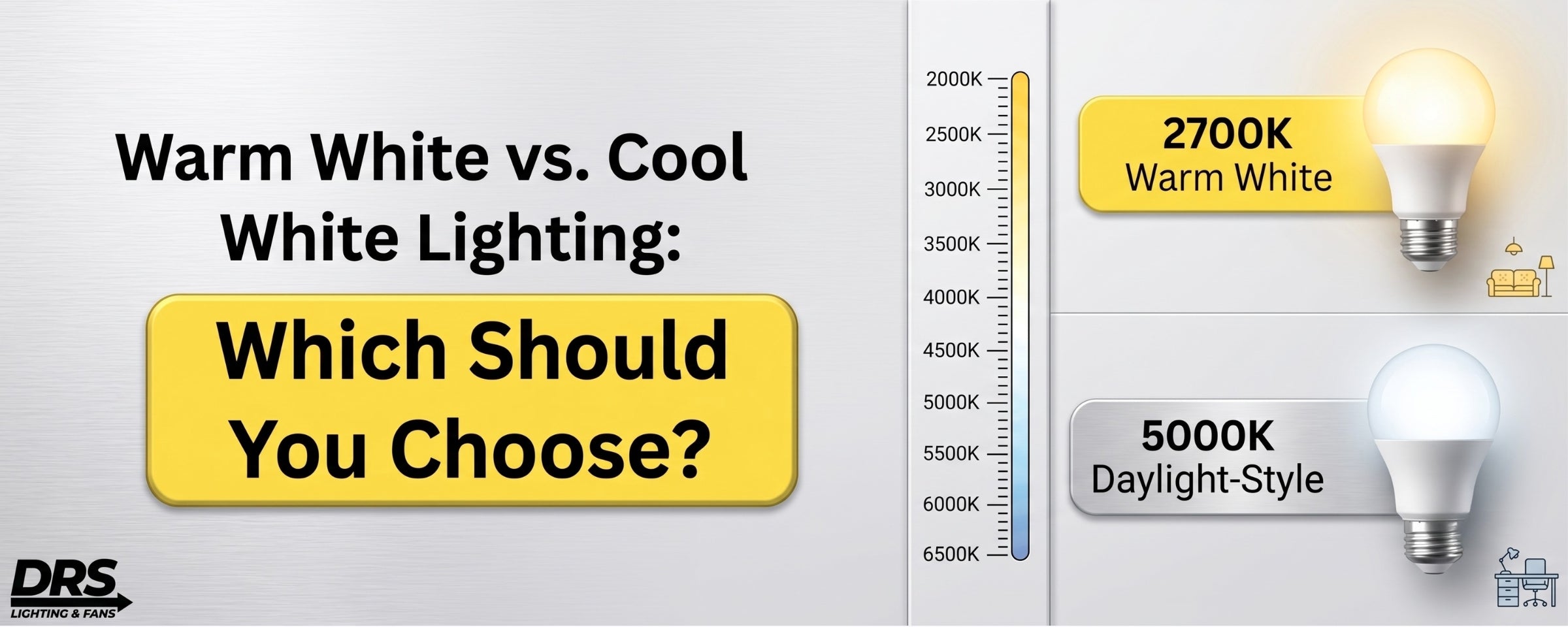
Warm White vs. Cool White Lighting: Which Should You Choose?
What Is Color Temperature?

Color temperature describes the appearance of the light produced by a bulb or fixture. It is measured in degrees Kelvin, usually shown with the letter “K” on the product packaging.
Lower Kelvin temperatures produce warmer, more yellow-toned light. Higher Kelvin temperatures produce cooler light with a brighter white or blue-toned appearance.
Common LED color temperatures include:
-
2700K: Soft, warm white light
-
3000K: Warm white with a slightly cleaner appearance
-
3500K: Neutral white light
-
4000K: Cool white light
-
5000K: Bright daylight-style light
Color temperature does not indicate how bright a bulb is. Brightness is measured in lumens. Two bulbs can produce the same number of lumens while having completely different color temperatures.
What Is Warm White Lighting?

Warm white lighting generally falls between 2700K and 3000K. It produces a soft white glow with subtle yellow or golden tones.
This type of lighting is similar to the appearance of traditional incandescent bulbs. It creates a relaxing, comfortable atmosphere and can help make a room feel more welcoming.
Warm white lighting works especially well with:
-
Wood furniture and flooring
-
Beige, cream, brown, and earth-tone colors
-
Traditional or rustic décor
-
Brass, bronze, and gold finishes
-
Rooms designed for relaxation
Because it creates a softer environment, warm white lighting is commonly used in bedrooms, living rooms, dining rooms, and hospitality spaces.
What Is Cool White Lighting?

Cool white lighting generally falls between 4000K and 5000K. It produces a crisp, bright white light with fewer yellow tones.
This type of lighting can make a room feel cleaner, more modern, and more energetic. It also provides better visual clarity for spaces where people need to work, clean, prepare food, or focus on details.
Cool white lighting works especially well with:
-
White, gray, blue, and cooler color palettes
-
Chrome, stainless steel, and silver finishes
-
Modern or contemporary interiors
-
Work surfaces and task areas
-
Rooms that need a bright, clean appearance
Cool white lighting is frequently used in kitchens, garages, offices, workshops, utility rooms, and some bathrooms.
Warm White vs. Cool White Lighting: What Is the Difference?

The main difference between warm white and cool white lighting is the visual tone of the light.
Warm white lighting has a softer, slightly yellow appearance that creates a cozy and relaxing atmosphere.
Cool white lighting has a cleaner, brighter appearance that can improve visibility and make a space feel more active.
Neither option is automatically better. The best choice depends on how the room is used.
For example, warm lighting may be more comfortable in a bedroom where you want to relax before sleeping. Cool white lighting may be more practical over a kitchen counter where you need to see ingredients and surfaces clearly.
Which Light Color Is Best for Each Room?
Using the same color temperature throughout an entire home may not produce the best results. Each room has a different purpose, so its lighting should support the activities that take place there.
Living Room
Recommended color temperature: 2700K to 3000K
Warm white lighting is usually the best choice for a living room. It creates a comfortable environment for relaxing, watching television, or spending time with family and guests.
A 3000K light can provide a slightly cleaner appearance while still maintaining a warm and welcoming atmosphere.
Bedroom
Recommended color temperature: 2700K to 3000K
Bedrooms typically benefit from soft, warm lighting. Lower color temperatures create a calming environment and are less visually stimulating than bright, cool lighting.
Consider using warm white bulbs in bedside lamps, ceiling fans, chandeliers, and other general bedroom fixtures.
Kitchen
Recommended color temperature: 3000K to 4000K
The best kitchen lighting depends on the design and how the space is used.
A 3000K light creates a warm, residential atmosphere, while 4000K provides clearer visibility for cooking, food preparation, and cleaning.
Many homeowners use warmer lighting in decorative pendants and cooler lighting under cabinets or above work surfaces.
Bathroom
Recommended color temperature: 3000K to 4000K
A warm 3000K light can create a comfortable, spa-like atmosphere. A cooler 4000K light may provide better visibility around mirrors and vanities.
For accurate grooming and makeup application, look for fixtures with a high Color Rendering Index, also known as CRI. A CRI of 90 or higher helps colors and skin tones appear more natural.
Dining Room
Recommended color temperature: 2700K to 3000K
Warm lighting is generally the preferred choice for dining rooms. It makes the space feel inviting and can complement chandeliers, pendants, wood tables, and traditional finishes.
Installing a dimmer can provide additional control for everyday meals, gatherings, and special occasions.
Home Office
Recommended color temperature: 3500K to 4000K
Neutral or cool white lighting can help create a focused and productive workspace. It provides a brighter visual environment without necessarily feeling as harsh as 5000K daylight lighting.
Task lamps can also be used to add focused light around desks and work surfaces.
Garage or Workshop
Recommended color temperature: 4000K to 5000K
Garages and workshops benefit from bright, cool lighting. These spaces often require strong visibility for repairs, storage, cleaning, and detailed projects.
A 5000K light creates a daylight-style appearance and can make it easier to see small objects and surface details.
Hallways and Entryways
Recommended color temperature: 2700K to 3000K
Warm white lighting creates a welcoming first impression in entryways and provides comfortable illumination in hallways.
Try to keep the color temperature consistent with nearby living spaces so the transition between rooms feels natural.
 Is 3000K Warm White or Cool White?
A 3000K light is generally classified as warm white. However, it has a cleaner and less yellow appearance than a traditional 2700K bulb.
For this reason, 3000K is one of the most versatile color temperatures for residential lighting. It works well in kitchens, bedrooms, living rooms, bathrooms, and dining areas.
Homeowners who want a comfortable atmosphere without an overly yellow appearance often prefer 3000K lighting.
Is 4000K Too Bright for a Home?
A 4000K light is not necessarily brighter than a 3000K light, but it may appear brighter because of its cooler color.
Whether 4000K feels too harsh depends on the room, fixture, surrounding colors, and personal preference. It can work well in kitchens, bathrooms, offices, closets, and utility spaces.
However, it may feel too clinical in bedrooms or living rooms that are intended to feel warm and relaxing.
Can You Mix Warm White and Cool White Lighting?
Warm white and cool white lighting can be used in the same home, but mixing them within one small room should be done carefully.
Placing a 2700K bulb directly beside a 5000K bulb can create an uneven or mismatched appearance. The difference becomes especially noticeable when both lights are visible at the same time.
For more consistent results:
-
Use one main color temperature within each room.
-
Keep matching fixtures at the same color temperature.
-
Use different temperatures only when each light has a separate purpose.
-
Avoid extreme color-temperature differences in connected open spaces.
-
Consider adjustable-color LED fixtures for greater flexibility.
In an open-concept kitchen and living room, for example, 3000K throughout the space may create a more unified appearance than using 4000K in the kitchen and 2700K in the living area.

What About Daylight Lighting?
Daylight bulbs are typically rated around 5000K to 6500K. They produce a bright white light that may have a slightly blue appearance.
Daylight lighting can be useful in garages, workshops, utility rooms, commercial spaces, and areas where strong visibility is important. However, it may feel overly intense in bedrooms, dining rooms, and living spaces.
For most residential interiors, 2700K to 4000K provides a more comfortable balance.
Other Factors to Consider When Choosing Lighting
Color temperature is important, but it should not be the only factor in your decision.
Brightness
Check the lumen rating to determine how much light the bulb or fixture produces. Higher lumens mean more light.
Color Rendering Index
CRI measures how accurately colors appear under a light source. A CRI of 80 is acceptable for many general applications, while a CRI of 90 or higher is recommended for bathrooms, kitchens, retail displays, and design-focused spaces.
Dimming Compatibility
Dimmable lighting allows you to adjust the brightness throughout the day. Confirm that the bulb, fixture, and dimmer switch are compatible.
Room Colors and Finishes
Warm lighting enhances wood, beige, cream, and gold tones. Cooler lighting can complement white, gray, blue, chrome, and stainless-steel finishes.
Natural Light
Rooms with abundant sunlight may work well with neutral or cooler lighting. Darker rooms may feel more comfortable with warm white light.

Quick Answer: Should You Choose Warm White or Cool White?
Choose warm white lighting when you want a room to feel cozy, comfortable, and inviting. It is usually the best option for bedrooms, living rooms, dining rooms, and entryways.
Choose cool white lighting when you want clearer visibility and a bright, clean atmosphere. It is commonly used in kitchens, offices, bathrooms, garages, and work areas.
For a versatile option that works in many residential spaces, 3000K warm white lighting offers a balanced appearance that is warm without looking overly yellow.
Frequently Asked Questions
Is warm white or cool white better for your eyes?
Comfort depends on the brightness, glare, fixture placement, and time of day. Warm white lighting is often more comfortable in the evening, while neutral or cool white lighting may improve visibility during detailed tasks.
Which light color makes a room look bigger?
Cooler white lighting can make some spaces appear brighter and more open. However, proper fixture placement, wall colors, natural light, and total lumen output also affect how large a room feels.
What color temperature is best for a modern home?
Modern homes commonly use 3000K or 4000K lighting. A 3000K light creates a warm, polished appearance, while 4000K produces a cleaner and more contemporary look.
What is the best LED color temperature for a whole house?
There is no single temperature that is perfect for every room. However, 3000K is a popular whole-house option because it provides a comfortable yet clean appearance. Cooler lighting can then be added in task-focused areas when needed.
Should all the light bulbs in one room match?
In most cases, yes. Using matching color temperatures creates a more consistent and professionally designed appearance.
Find the Right Lighting at Direct Renovation Supply
The right color temperature can make your lighting feel just as intentional as the furniture, finishes, and décor in your space.
Direct Renovation Supply offers lighting options for kitchens, bedrooms, bathrooms, living spaces, work areas, and renovation projects. Whether you prefer the comfortable glow of warm white lighting or the clean appearance of cool white lighting, our team can help you find the right products for your project.
Explore our lighting selection or visit our Carrollton showroom to compare available options in person.