
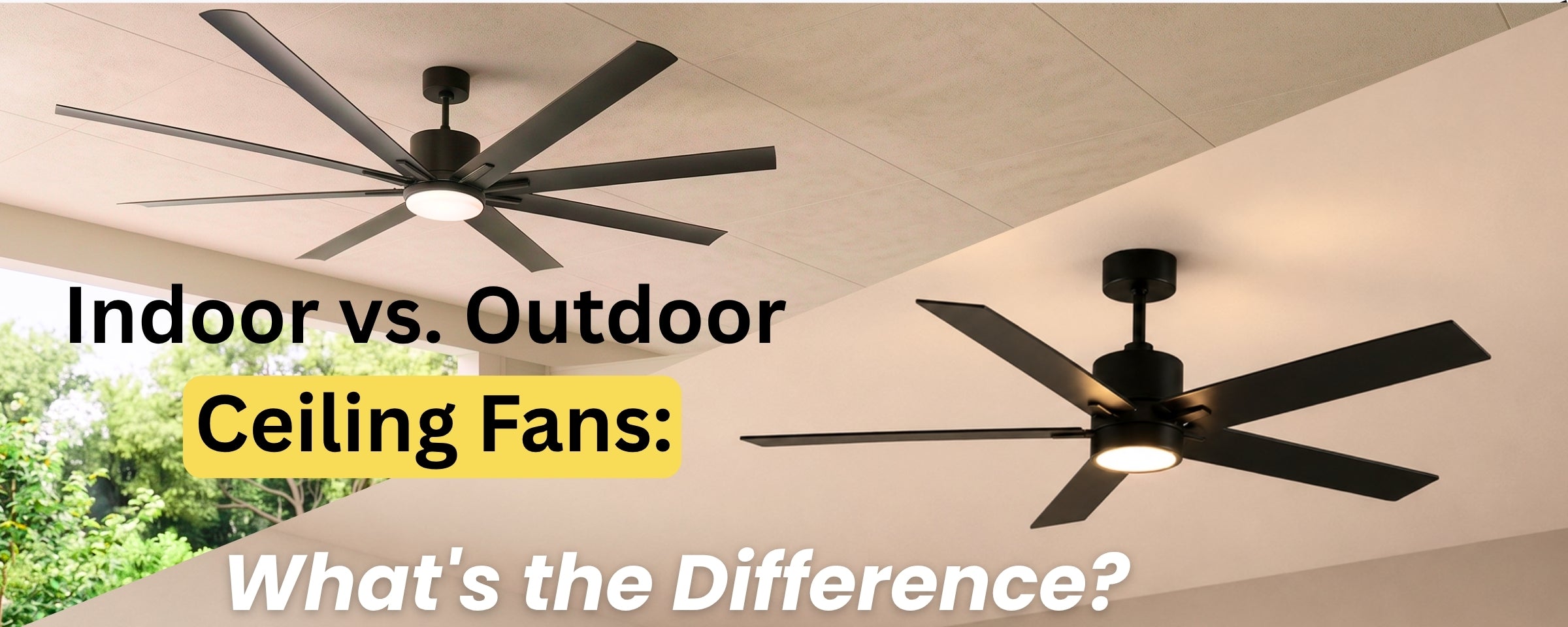
Indoor vs. Outdoor Ceiling Fans: What's the Difference?
Ceiling fans are a practical way to improve airflow, make a room feel more comfortable, and reduce the strain on your heating and cooling system. However, not every ceiling fan is designed for every environment.
An indoor ceiling fan may work perfectly in a bedroom or living room, but installing that same fan on a covered patio could lead to rust, warping, electrical damage, or premature failure.
Understanding the difference between indoor and outdoor ceiling fans can help you choose a fan that performs safely and lasts longer.
Quick Answer: Indoor vs. Outdoor Ceiling Fans

The main difference between indoor and outdoor ceiling fans is their ability to withstand moisture.
Indoor ceiling fans are designed for dry, enclosed rooms. Outdoor ceiling fans are constructed with moisture-resistant materials and electrical components that can handle damp or wet conditions.
Outdoor fans are generally classified as either:
- Damp-rated ceiling fans, which can handle humidity and limited moisture
- Wet-rated ceiling fans, which can withstand direct exposure to rain and water
Choosing the correct rating is just as important as choosing the correct fan size or style.
What Is an Indoor Ceiling Fan?

An indoor ceiling fan is designed for rooms that remain dry and protected from outdoor weather conditions.
Common locations for indoor ceiling fans include:
- Bedrooms
- Living rooms
- Dining rooms
- Home offices
- Hallways
- Finished basements
- Indoor kitchens
Most of the ceiling fans at Direct Renovation Supply fall into this category. Dry-location favorites include the 52" 5-Blade UFO Fan, available in brushed nickel, matte black, and rubbed bronze with integrated LED light kits, along with the 5-Blade Contemporary Fan and the Monica 3-Blade 56" for larger rooms.
Indoor fans are not built to withstand rain, condensation, or prolonged humidity. Their blades, motor housing, finishes, and internal electrical components may become damaged when exposed to moisture.
Even a covered outdoor space can experience humidity, wind-driven rain, and temperature changes. For that reason, a standard indoor-rated fan should not be installed outdoors.
What Is an Outdoor Ceiling Fan?

An outdoor ceiling fan is designed with materials and components that provide additional protection against moisture, humidity, and changing temperatures.
Depending on its rating, an outdoor fan may feature:
- Moisture-resistant motor housing
- Sealed electrical components
- Rust-resistant hardware
- Weather-resistant finishes
- Durable plastic or composite blades
- Materials that are less likely to warp or peel
Outdoor fans are commonly installed on patios, porches, pergolas, gazebos, outdoor kitchens, and other exterior living spaces.
However, not all outdoor fans offer the same level of protection. You must determine whether the space requires a damp-rated or wet-rated ceiling fan.
What Is a Damp-Rated Ceiling Fan?

A damp-rated ceiling fan is designed for areas with high humidity or occasional moisture, but it should not be directly exposed to rain or water.
Damp-rated fans work best in fully covered spaces such as:
- Covered patios
- Screened-in porches
- Covered balconies
- Enclosed sunrooms
- Outdoor kitchens with complete overhead coverage
- Bathrooms with high humidity
Direct Renovation Supply carries damp-rated options in two very different sizes. The 3-Blade 42" Modern Damp Location Fan in matte black fits smaller covered porches and balconies, with a selectable 3000K, 4000K, or 5000K light. For a large covered patio or an oversized garage, the 6-Blade 72" Fan with damp-rated LED moves air across far more square footage and comes in matte black or textured gold.
A damp-rated fan may tolerate humid air and moisture in the environment, but it is not designed to be sprayed with water or exposed to heavy rain.
Before installing one, make sure the fan will remain protected from direct precipitation, including wind-driven rain.
What Is a Wet-Rated Ceiling Fan?

A wet-rated ceiling fan is designed for more exposed outdoor locations. These fans can handle direct contact with rain and water when installed according to the manufacturer's instructions.
Wet-rated fans are a better choice for:
- Open patios
- Pergolas
- Gazebos
- Uncovered decks
- Poolside structures
- Outdoor spaces exposed to wind-driven rain
Wet-rated fans typically have sealed motor housings, corrosion-resistant materials, and weather-resistant blades. Many can also be cleaned more easily because their components are designed to tolerate water exposure.
If your space needs this level of protection, the Modern Forms Roboto 62" Smart Ceiling Fan in matte white and the Craftmade Sterling 60" Flat Black Smart Ceiling Fan are both wet-rated, and both include an integrated LED with remote and Wi-Fi control - so you can run them from your phone instead of walking out into the rain.
A wet rating does not mean the fan can be submerged in water. It means the fan is approved for outdoor environments where direct moisture exposure is expected.
Can You Use an Outdoor Ceiling Fan Indoors?

Yes. Outdoor ceiling fans can generally be installed indoors.
An outdoor-rated fan may be especially useful in indoor areas where humidity or moisture is common, such as:
- Bathrooms
- Laundry rooms
- Indoor pool areas
- Workshops
- Garages
- Sunrooms
Outdoor fans may have a more rugged appearance than traditional indoor fans, although many modern models are designed to work with both indoor and outdoor décor. The 54" 3-Metal Blade Industrial Fan in matte black is a good example - its metal blades suit a workshop or garage just as well as a covered exterior space.
The main disadvantage is that outdoor-rated fans may cost more because of their moisture-resistant construction.
Can You Use an Indoor Ceiling Fan Outdoors?

You should not install an indoor-rated ceiling fan outdoors.
Even under a covered patio, an indoor fan may still be exposed to:
- Humidity
- Condensation
- Temperature changes
- Wind-driven rain
- Insects and outdoor debris
- Corrosive air near pools or coastal areas
Moisture can damage the motor, wiring, mounting hardware, finish, and fan blades. Wooden or medium-density fiberboard blades may absorb moisture and begin to sag, swell, crack, or warp.
Using an indoor fan outside may also void the manufacturer's warranty and create a potential electrical safety hazard.
Key Differences Between Indoor and Outdoor Ceiling Fans

Moisture Resistance
Indoor fans are made for dry rooms. Outdoor fans are designed to resist humidity and moisture based on their damp or wet rating.
Blade Materials
Indoor fans may use wood or fiberboard blades. Outdoor fans commonly use plastic, ABS, or composite blades that are less likely to warp in humid conditions.
Motor Protection
Outdoor fan motors and electrical components typically have additional sealing or protective construction.
Hardware and Finish
Outdoor fans often use corrosion-resistant screws, mounting hardware, and finishes to help reduce rust, peeling, and fading.
Price
Outdoor-rated ceiling fans may cost more than comparable indoor models because they require more durable materials and protective construction.
Available Styles
Indoor fans are available in a wide range of decorative styles. Outdoor options were once more limited, but today you can find outdoor fans in modern, industrial, farmhouse, coastal, and traditional designs.
How to Choose the Right Ceiling Fan Rating
Before purchasing a ceiling fan, consider how much moisture the installation area receives.

Choose an Indoor-Rated Fan When:
- The room is fully enclosed
- The area remains dry
- The fan will not be exposed to excessive humidity
- The space is protected from outdoor weather
Choose a Damp-Rated Fan When:
- The area is fully covered
- Humidity is present
- The fan will not receive direct rain
- Moisture may occasionally enter the environment
Choose a Wet-Rated Fan When:
- The area is partially or fully exposed
- Wind-driven rain can reach the fan
- The fan may come into direct contact with water
- The installation is near a pool or uncovered outdoor area
When you are unsure whether a covered space is completely protected, a wet-rated fan may provide greater durability and peace of mind.
Other Factors to Consider When Buying an Outdoor Ceiling Fan
The moisture rating is important, but it is not the only factor to consider.
Fan Size
Choose a ceiling fan diameter that matches the size of the space. A fan that is too small may not provide enough airflow, while an oversized fan may overpower the area. Direct Renovation Supply carries blade spans from 42 inches all the way up to the 84" Barcelona 8-Blade Fan, so there is a size for everything from a small covered balcony to a great room.
Ceiling Height
The fan blades should generally be installed at least 7 feet above the floor. Higher ceilings may require a downrod to position the fan at a more effective height.
Airflow
Review the fan's airflow performance rather than choosing a model based only on the number of blades. Motor quality, blade pitch, fan diameter, and overall design all affect how much air the fan can move.
Lighting
Some outdoor fans include an integrated LED light. Make sure the fan's light kit carries an appropriate damp or wet rating for the installation area. Several DRS models, including the 3-Blade 52" Neo Fan, let you switch the light between 3000K, 4000K, and 5000K, which is handy when you want warm light on a porch in the evening and brighter light for tasks.
Controls
Consider whether you prefer a wall control, pull chain, remote control, or smart fan system. Any separate control equipment should also be suitable for the installation environment. DRS fans span all of these - many indoor models include a wall control, the 42" damp-rated fan uses a simple pull chain, and the wet-rated Roboto and Sterling connect to Wi-Fi for app control.
Coastal Conditions
Outdoor fans installed near saltwater may require additional corrosion-resistant construction. Look for models specifically designed for coastal or salt-air environments when necessary.

Frequently Asked Questions
How can I tell whether a ceiling fan is outdoor-rated?
Check the product packaging, specification sheet, installation manual, or manufacturer's product listing. The fan should be clearly identified as indoor-rated, damp-rated, or wet-rated. On the Direct Renovation Supply website, you can filter the ceiling fan collection by Dry, Damp, or Wet Location Listed to see only the fans rated for your space.
Do not assume a fan is suitable for outdoor use based only on its appearance or blade material.
Do I need a wet-rated fan for a screened-in porch?
A damp-rated fan may be appropriate when the porch is fully covered and protected from direct rain. If wind-driven rain can reach the fan, choose a wet-rated model.
Can a damp-rated fan get rained on?
Damp-rated fans are not intended for direct rain exposure. Use a wet-rated fan anywhere water can directly contact the fixture.
Are outdoor ceiling fans waterproof?
Outdoor ceiling fans are moisture-resistant according to their rating, but they are not designed to be submerged. Always follow the manufacturer's installation and maintenance instructions.
Can I install an outdoor ceiling fan in a bathroom?
Yes. A damp-rated or wet-rated fan can be a practical choice for a bathroom because it is better suited for humid conditions. Confirm that the fan is approved for the specific location and complies with local electrical requirements.
Do outdoor ceiling fans prevent mosquitoes?
The airflow from a ceiling fan may make it more difficult for mosquitoes and other small flying insects to remain near people, but a fan is not a complete pest-control solution.
Final Thoughts
The difference between indoor and outdoor ceiling fans comes down primarily to moisture protection.
Use an indoor-rated ceiling fan only in dry, enclosed rooms. Choose a damp-rated fan for covered spaces with humidity or occasional moisture. Choose a wet-rated fan for areas where rain or direct water exposure is possible.
Selecting the proper fan rating can help protect the motor, blades, finish, and electrical components while improving the fan's long-term performance.
Explore ceiling fans and lighting products from Direct Renovation Supply to find an option that matches your space, style, and airflow needs.